


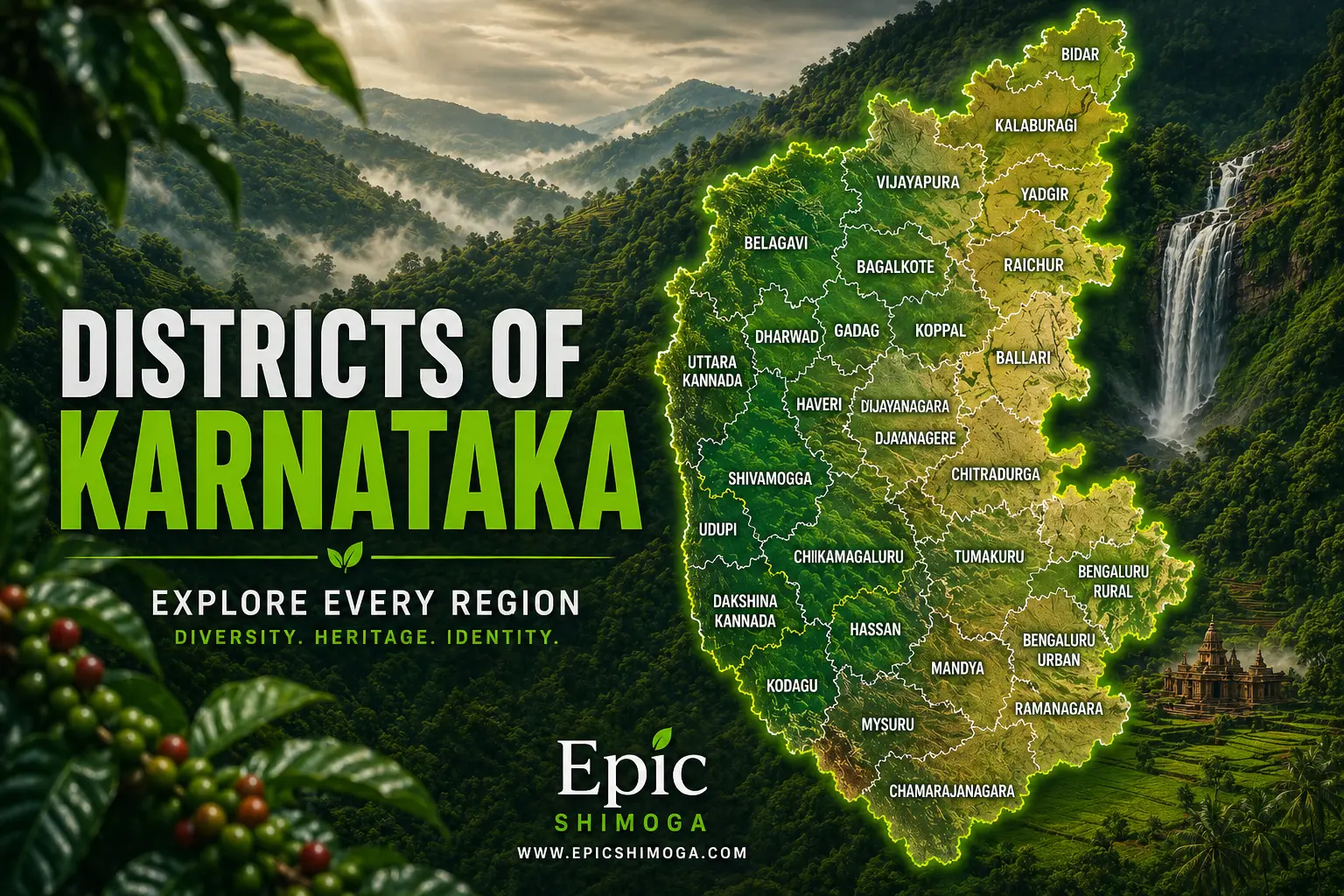
This article gives a complete and simple guide to all districts in Karnataka. You will learn the full list of 31 districts, their regions, key details, and how the system works. It is easy to read, clear, and useful for students, travelers, and anyone who wants correct information about Karnataka districts.
Introduction
Karnataka is one of the major states in India. It has a well-organized administrative system. The state is divided into districts to make governance easy and smooth.
At present, Karnataka has 31 districts. Each district has its own administration, offices, and local system to manage development, law, and services.
Districts are important because they connect the state government with local people. Every scheme, road work, school, and public service is managed at the district level.
Complete List of Districts in Karnataka
- Bagalkot
- Ballari
- Belagavi
- Bengaluru Rural
- Bengaluru Urban
- Bidar
- Chamarajanagar
- Chikkaballapur
- Chikkamagaluru
- Chitradurga
- Dakshina Kannada
- Davanagere
- Dharwad
- Gadag
- Hassan
- Haveri
- Kalaburagi
- Kodagu
- Kolar
- Koppal
- Mandya
- Mysuru
- Raichur
- Ramanagara
- Shivamogga
- Tumakuru
- Udupi
- Uttara Kannada
- Vijayapura
- Yadgir
- Vijayanagara
Districts with Key Details
This table gives a quick view of all districts with their headquarters and region. If you want to understand each district, including history, heritage, tourism places, geography, culture, economy, and local importance, see the district-wise section given below.
| No. | District | Headquarters | Region |
|---|---|---|---|
| 1 | Bagalkot | Bagalkot | North |
| 2 | Ballari | Ballari | North |
| 3 | Belagavi | Belagavi | North |
| 4 | Bengaluru Rural | Bengaluru | South |
| 5 | Bengaluru Urban | Bengaluru | South |
| 6 | Bidar | Bidar | North |
| 7 | Chamarajanagar | Chamarajanagar | South |
| 8 | Chikkaballapur | Chikkaballapur | South |
| 9 | Chikkamagaluru | Chikkamagaluru | Malnad |
| 10 | Chitradurga | Chitradurga | South |
| 11 | Dakshina Kannada | Mangaluru | Coastal |
| 12 | Davanagere | Davanagere | South |
| 13 | Dharwad | Dharwad | North |
| 14 | Gadag | Gadag | North |
| 15 | Hassan | Hassan | South |
| 16 | Haveri | Haveri | North |
| 17 | Kalaburagi | Kalaburagi | North |
| 18 | Kodagu | Madikeri | Malnad |
| 19 | Kolar | Kolar | South |
| 20 | Koppal | Koppal | North |
| 21 | Mandya | Mandya | South |
| 22 | Mysuru | Mysuru | South |
| 23 | Raichur | Raichur | North |
| 24 | Ramanagara | Ramanagara | South |
| 25 | Shivamogga | Shivamogga | Malnad |
| 26 | Tumakuru | Tumakuru | South |
| 27 | Udupi | Udupi | Coastal |
| 28 | Uttara Kannada | Karwar | Coastal |
| 29 | Vijayapura | Vijayapura | North |
| 30 | Yadgir | Yadgir | North |
| 31 | Vijayanagara | Hosapete | North |
31st District of Karnataka
The newest district is Vijayanagara district.
- Formed in: 2021
- Parent district: Ballari
- Headquarters: Hosapete
This district was created to improve administration and give better services to people. It also helps in faster development of the region.
Largest and Smallest Districts
The largest district in Karnataka by area is Belagavi district. It covers a very wide area and has many towns and villages.
The smallest district is Bengaluru Urban district. Even though it is small in size, it is the most developed and includes the capital city.
This shows that size and importance are different. Some districts are big in land, while others are strong in economy and population.
Regional Classification of Karnataka Districts
Karnataka is divided into different natural and cultural regions. This helps to understand geography and lifestyle better.
Malnad Region
- Chikkamagaluru
- Kodagu
- Shivamogga
This region has hills, forests, and heavy rainfall.
Coastal Karnataka
- Dakshina Kannada
- Udupi
- Uttara Kannada
These districts lie near the Arabian Sea and are known for beaches and ports.
North Karnataka
- Bagalkot
- Ballari
- Belagavi
- Bidar
- Dharwad
- Gadag
- Haveri
- Kalaburagi
- Koppal
- Raichur
- Vijayapura
- Yadgir
- Vijayanagara
This region has dry climate and rich history.
South Karnataka
- Bengaluru Rural
- Bengaluru Urban
- Chamarajanagar
- Chikkaballapur
- Chitradurga
- Davanagere
- Hassan
- Kolar
- Mandya
- Mysuru
- Ramanagara
- Tumakuru
This region is more developed and includes major cities.
Administrative Structure of Districts
Each district in Karnataka is managed in a structured way.
Taluks : A district is divided into smaller units called taluks. These help in local administration and service delivery.
Deputy Commissioner (DC) : The DC is the head of the district. This officer manages law and order, development work, and government programs.
Hierarchy : State Government → District → Taluk → Village
This system helps in smooth functioning and better control.
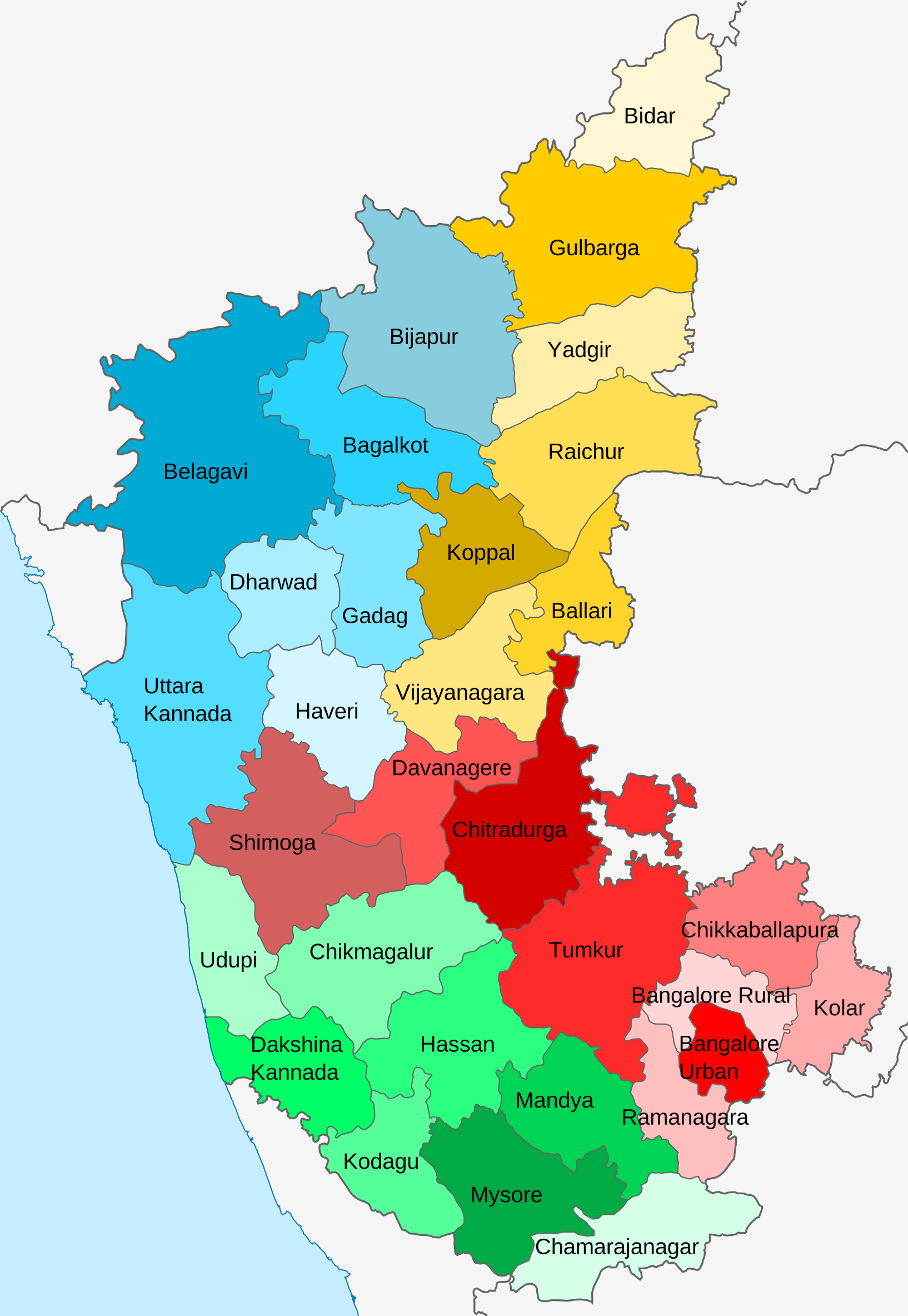
Karnataka District Map
A district map of Karnataka shows all 31 districts clearly. It also helps to understand how regions are spread across the state.
- Coastal districts are on the western side
- Malnad region lies in the Western Ghats
- North Karnataka is in the upper part
- South Karnataka covers central and southern areas
- this map source is from wikipedia.org
Explore Karnataka Districts : District Directory
1. Bagalkot
Bagalkot has a deep historical background and is close to famous heritage sites like Badami and Pattadakal. The district is known for ancient temples, sandstone structures, and dry landscape with strong cultural roots. Tourism and history both play an important role here. Bagalkot district history, important places, and detailed local information.
2. Ballari
Ballari is widely known for mining and industrial activity. It also connects to the great Vijayanagara Empire history, with forts and ruins showing its past strength. The district balances both heritage and economy. Ballari district history, local, and present condition details.
3. Belagavi
Belagavi is the largest district in Karnataka by area and has wide fertile land that supports strong agriculture. It also has growing towns and urban centers, along with good road and rail connectivity. Its location near state borders makes it important for trade and movement. Belagavi district, historical background, diverse culture, and a strategic location overview.
4. Bengaluru Rural
Bengaluru Rural surrounds the capital city and includes villages, farms, and fast-growing residential areas. It supports the nearby urban region by providing space for expansion, agriculture, and local resources. The district shows a mix of rural life and gradual development. Bengaluru Rural district details, surroundings, and local structure.
5. Bengaluru Urban
Bengaluru Urban is the smallest district but the most developed in Karnataka. It includes the capital city, known for IT companies, startups, and modern infrastructure, making it a major center for jobs, business, and innovation. It plays a key role as the economic hub of the state. Bengaluru Urban district overview, city importance, and key details.
6. Bidar
Bidar has a rich history with forts, palaces, and fine Islamic architecture that reflect its past as a major center of power in medieval times. The district still shows strong cultural influence through its monuments, traditions, and heritage sites. Bidar district history, monuments, and cultural details.
7. Chamarajanagar
Chamarajanagar is known for its forests and wildlife reserves, making it one of the greenest districts in Karnataka. It has peaceful surroundings and is close to major forest areas and national parks, with rich biodiversity and natural landscapes. Chamarajanagar district nature, forest areas, and local details.
8. Chikkaballapur
Chikkaballapur is known for its hills and popular trekking spots like Nandi Hills, which attract visitors for sunrise views and outdoor activities. The district also has growing agriculture and is slowly developing in tourism due to its natural landscapes and proximity to Bengaluru. Chikkaballapur district landscape, places, and overview.
9. Chikkamagaluru
Chikkamagaluru is a hill district known for its wide coffee plantations and cool climate throughout the year. It is one of the most scenic regions in Karnataka, with green valleys, misty hills, and forest-covered mountains, making it a peaceful and refreshing place. Chikkamagaluru district nature, travel, Culture, Coffee Land and Importance
10. Chitradurga
Chitradurga is known for its massive hill fort built across rocky terrain, showing strong defense design and history. The district has a unique landscape with large stones and hills, and it attracts visitors for its architecture, legends, and past importance. Chitradurga district fort history, terrain, and local details.
11. Dakshina Kannada
Dakshina Kannada is a coastal district with beaches, temples, and active port operations. Mangaluru city serves as a major economic and educational center, with colleges, trade activity, and strong connectivity. The district shows a mix of coastal lifestyle, culture, and development. Dakshina Kannada coastal culture and Mangaluru city overview
12. Davanagere
Davanagere is known for its industries, especially textile and manufacturing units, along with a strong local food culture. The district is also an important transport hub, well connected by roads and railways, linking different parts of Karnataka. Davanagere district growth, Economics, lifestyle, and local overview.
13. Dharwad
Dharwad is well known for its education, music, and literature. The district has a calm and peaceful environment, making it a strong center for learning and cultural growth. It has produced many artists, writers, and scholars over the years, which adds to its identity.
Dharwad district education, music, and cultural heritage details.
14. Gadag
Gadag is known for its historic temples and monuments that show detailed stone architecture and old design styles. The district reflects the rich cultural and architectural past of Karnataka, with many sites connected to earlier dynasties and traditions. It remains an important place for history and heritage. Gadag district temples and historical architecture details.
15. Hassan
Hassan is located near famous temple towns like Belur and Halebidu, known for their detailed carvings and historic value. The district plays an important role in tourism because of these heritage sites, while agriculture also supports the local economy. Hassan district temple sites, agriculture, and details.
16. Haveri
Haveri is mainly an agricultural district where farming is the main source of livelihood. The lifestyle here is simple and rooted in rural traditions, with steady progress in basic infrastructure and local development. The district is gradually improving with a focus on agriculture and village growth. Haveri district farming life and rural development.
17. Kalaburagi
Kalaburagi is a major district in North Karnataka known for its historical buildings, forts, and old monuments that reflect its past importance. Along with its heritage, the district is also growing with expanding urban areas, education centers, and local development, making it an important region in the state. Kalaburagi (Gulbarga) district history, urban growth, and Timeline story.
18. Kodagu
Kodagu, also known as Coorg, is a hill district covered with forests, coffee estates, and green landscapes. It is known for its cool climate, clean air, and peaceful surroundings, making it one of the most scenic regions in Karnataka. The district also has a unique local culture and lifestyle. Kodagu (Coorg) district hills, nature, local and historical architecture.
19. Kolar
Kolar is well known for its gold mining history, especially the famous Kolar Gold Fields. Today, the district has shifted more towards agriculture, with crops and farming playing a major role. Local trade and small businesses also support the economy. Kolar district gold mining history and agriculture details
20. Koppal
Koppal is located near the famous Hampi region and holds strong historical importance with links to the Vijayanagara Empire. The district has many heritage sites and old structures that reflect its past. At the same time, it is developing with improved roads, infrastructure, and better connectivity. Koppal district heritage, nearby sites, and overview.
21. Mandya
Mandya is well known for sugarcane farming, supported by strong irrigation from nearby rivers and canals. Agriculture is the main livelihood here, and the district plays an important role in food production and rural economy in Karnataka. Mandya district farming, rivers, KRS Dam and Taluks.
22. Mysuru
Mysuru is famous for its grand palace, rich culture, and strong tourism appeal. The district is known for festivals, traditional arts, and well-planned city layout, making it one of the most visited and well-known places in Karnataka. Mysuru district culture, heritage, attractions, history and tourism.
23. Raichur
Raichur has a strong agricultural base supported by rivers like the Krishna and Tungabhadra, which help in irrigation and farming. The district is also known for its forts and temples that reflect its historical importance and past rule by different dynasties. Raichur district farming, rivers, and historical background.
24. Ramanagara
Ramanagara is known for its rocky hills and natural landscapes, which make it a popular place for trekking and outdoor activities. The district is also important for silk production, with many local industries connected to sericulture and weaving. Ramanagara district hills, silk industry, and trekking spots.
25. Shivamogga
Shivamogga is a green and fertile district with many rivers, dense forests, and famous waterfalls. It is an important part of the Malnad region and is known for its natural beauty, rainfall, and peaceful environment. The district also supports agriculture and eco-tourism.
Shivamogga district Western Ghats nature and waterfalls.
26. Tumakuru
Tumakuru is growing quickly with new industries, factories, and education centers. Its location near Bengaluru makes it important for expansion and investment. The district is becoming a key area for development, jobs, and future growth. Tumakuru district Temple Heritage to industrial growth and development.
27. Udupi
Udupi is a coastal district known for its famous temples and unique food culture. It also has clean beaches and popular tourist spots, making it an important place for both pilgrimage and travel. The district combines tradition with coastal lifestyle. Udupi district temples, beaches, and food culture.
28. Uttara Kannada
Uttara Kannada is rich in forests, wildlife, rivers, and a long coastline along the Arabian Sea. It is one of the most naturally diverse districts, with beaches, hills, and protected forest areas. The region is known for its clean environment and strong connection to nature. Uttara Kannada district forests, coastline, and biodiversity
29. Vijayapura
Vijayapura is known for its grand historical monuments, including the famous Gol Gumbaz, which shows impressive design and engineering. The district reflects the rich architectural past of the region, with many structures built during earlier dynasties. Vijayapura district (Bijapur Empire) monuments and architectural heritage.
30. Yadgir
Yadgir is a developing district with a simple rural lifestyle where agriculture is the main activity. The district is gradually improving in roads, basic services, and public infrastructure, showing steady growth over time. Yadgir district Fort, Rulers, Taluks and Legacy.
31. Vijayanagara
Vijayanagara is the newest district and has a strong connection to the historic Hampi region, which reflects the glory of the Vijayanagara Empire. The district has high tourism value with many heritage sites, ruins, and cultural landmarks that attract visitors. Vijayanagara district history, Formation, and regional importance.
Conclusion
Karnataka’s 31 districts show a strong and well-planned system. Each district has its own role, culture, and importance. From coastal areas to hill regions, every part is unique.
Understanding districts gives a clear idea of how the state works. It also helps in travel planning, education, and general knowledge.

1 Comment
Pingback: Shimoga Karnataka History: Malnad to Western Ghats Falls