


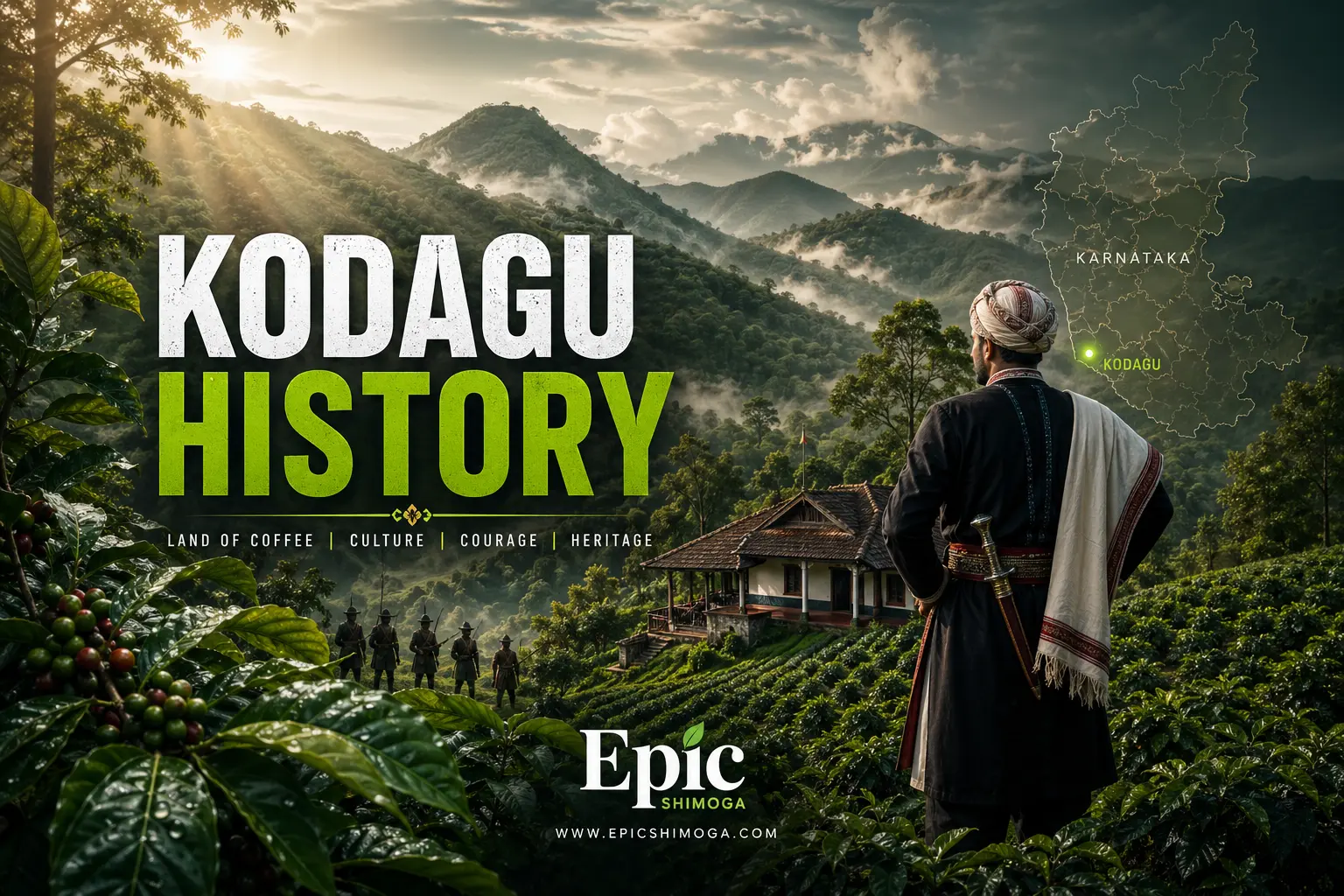
Kodagu, also known as Coorg, is a hill district in Karnataka famous for its coffee estates, forests, and rich history. In this guide, you will understand Kodagu history, meaning, location, importance, and present condition with clear and simple explanation.
In this article, you will explore complete details about Kodagu Karnataka history, coorg timeline, cultural roots, environment, and economic importance. It also answers common search questions like “Coorg in which district” and “Is Coorg and Kodagu the same?”
Kodagu is a district located in the Malnad region of Karnataka within the Western Ghats. It is known for its natural landscape, plantation economy, and strong Kodava identity. The district headquarters is Madikeri.
This article explains Kodagu history from early rule to modern development, along with its culture, agriculture, and regional importance.
What is Kodagu (Coorg)? Overview of Kodagu Karnataka
Kodagu, also called Coorg, is a district in Karnataka known for its highland geography and plantation-based economy. Many people search “Coorg in which district,” and the correct answer is that Coorg itself is the district, officially named Kodagu.
Kodagu is one of the key regions in Karnataka for coffee production and eco-tourism, with strong environmental and agricultural value.
- Kodagu is also known as Coorg
- Located in Malnad region of Karnataka
- District headquarters: Madikeri
- Major role in coffee production in India
- Important tourism and biodiversity region
Kodagu taluk list
Kodagu district has 3 taluks that handle administration and local governance.
- Madikeri taluk
- Virajpet taluk
- Somwarpet taluk
Total taluks in Kodagu: 3
Kodagu pin code
Kodagu district uses different pin codes based on area, with Madikeri as the central code.
- Main pin code: 571201
- Other important codes: 571218 (Virajpet), 571236 (Somwarpet region)
- Helps in postal services and regional identification
Where is Kodagu (Coorg) Located in Karnataka?
Kodagu is located in the southwestern part of Karnataka along the Western Ghats mountain range. It shares borders with Kerala and nearby districts like Mysuru, Hassan, and Dakshina Kannada.
The district has hilly terrain, dense forests, and river systems which make it geographically important.
- Southwest Karnataka location
- Borders Kerala (Kannur, Wayanad regions)
- Near Mysuru (approx. 120 km)
- Part of Western Ghats biodiversity zone
- Road connectivity via NH275
What is the Meaning and Origin of Kodagu?
The name Kodagu is believed to come from the word “Kodamalnad,” meaning steep or dense forest land. This reflects the natural terrain of hills and forests.
During British rule, the name Coorg became common, which is still widely used today.
- Derived from “Kodamalnad” (hilly forest region)
- Coorg is the anglicized name
- Kodagu meaning linked to terrain and geography
History of Kodagu (Coorg State) Karnataka : Timeline
Kodagu history shows a structured timeline from early tribal rule to a princely state and later integration into Karnataka.
In early history, the region was inhabited by tribal communities and small local rulers. By the 17th century, the Haleri dynasty established control under Mudduraja, who made Madikeri the capital. In the 18th century, Kodagu faced invasions from Mysore rulers like Hyder Ali and Tipu Sultan. In 1834, the British defeated the last ruler Chikka Veerarajendra and annexed Kodagu, forming Coorg Province. After Indian independence in 1947, it became Coorg State and later merged into Mysore State (now Karnataka) in 1956.
- Early tribal settlements and local chiefs
- Haleri dynasty rule (17th century, capital at Madikeri)
- Conflicts with Hyder Ali and Tipu Sultan (18th century)
- British annexation in 1834
- Coorg Province under British administration
- Became Coorg State (1947–1956)
- Merged into Karnataka in 1956
Did Kodagu (Coorg) Have an Old Name?
Kodagu was widely known as Coorg during British rule and early post-independence period. The name Coorg is still commonly used in tourism and online searches.
Coorg is also known as the English version of Kodagu, and both names refer to the same district.
- Old name: Coorg
- Used officially during British period
- Coorg is also known as Kodagu
- Both names are used today
Why Kodagu (Coorg) is Famous?
Kodagu is famous for its coffee estates, natural landscapes, and key tourist locations in Karnataka. It attracts visitors for both nature and heritage.
The district also has important sites linked to the origin of the Cauvery River and scenic viewpoints.
- Coffee estates across Madikeri and Virajpet
- Tourist places: Madikeri Fort, Abbey Falls, Raja’s Seat
- Talakaveri (origin of River Cauvery)
- Popular for trekking, waterfalls, and hill views
Historical Background of Kodagu Karnataka
Kodagu has a strong cultural structure shaped by its past rulers and geographic isolation. The Kodava community developed a distinct identity with unique customs.
Traditional houses called Ainmane, temple practices, and martial traditions reflect long-term cultural continuity.
- Kodava community with unique traditions
- Ainmane (ancestral homes) still preserved
- Temple practices and local rituals
- Martial history and disciplined lifestyle
- Cultural identity remains strong today
Natural Environment and Climate of Kodagu
Kodagu has a rich ecological environment as part of the Western Ghats. It receives heavy rainfall and supports dense forests and wildlife.
The district plays a key role in water resources and biodiversity conservation.
- Annual rainfall around 2500–3500 mm
- Cool climate due to elevation
- River Cauvery originates at Talakaveri
- Dense forests and wildlife reserves
- Important biodiversity hotspot
Transport and Connectivity of Kodagu
Kodagu relies mainly on road transport as it does not have direct railway or airport facilities.
Nearby cities provide access to rail and air connectivity.
- Connected by NH275 to Mysuru and Mangaluru
- Nearest railway station: Mysuru (~120 km)
- Nearest airport: Mangaluru (~160 km)
- KSRTC and private buses available
- Internal transport mainly by road
Education and Development in Kodagu
Kodagu has steady development with focus on education, tourism, and agriculture. Due to environmental sensitivity, industrial growth is limited.
Educational institutions are mainly located in urban centers.
- Colleges in Madikeri and Virajpet
- Schools across taluks
- Limited heavy industries
- Eco-sensitive development approach
- Growing tourism-based economy
Economy and Agriculture of Kodagu
Kodagu economy is strongly based on plantation agriculture. It is one of the largest coffee-producing districts in India.
Spices and secondary crops also contribute to income.
- Coffee is the primary crop (Arabica and Robusta)
- Pepper and cardamom as major spices
- Rice cultivation in lowland areas
- Plantation economy supports rural Karnataka
- Tourism adds secondary income
Culture and Local Life in Kodagu
Kodagu has a distinct cultural identity shaped by the Kodava community. Traditions are closely linked to land, family, and festivals.
Local lifestyle is simple but strongly structured around customs.
- Kodava dress and customs
- Festivals like Puthari (harvest festival)
- Traditional food like Pandi Curry
- Strong family and clan system
- Respect for land and ancestors
Population of Kodagu (Coorg)
Kodagu has a relatively low population due to its hilly terrain and forest coverage. The population includes multiple communities.
It has a balanced mix of religions and cultures.
- Population around 5.5–6 lakh
- Low population density
- Majority rural population
- Muslims form around 10–15% minority
- Mixed communities: Hindus, Muslims, Christians
Why is Kodagu Important?
Kodagu is important for Karnataka due to its role in agriculture, water resources, and environment. It also has national importance for coffee production.
Its ecological value makes it critical for long-term sustainability.
- Major contributor to India’s coffee output
- Source of River Cauvery water system
- Important Western Ghats ecosystem
- Supports biodiversity and forests
- Tourism and eco-economy importance
Modern Day Kodagu Karnataka
Today, Kodagu is developing with a focus on eco-tourism and sustainable agriculture. The region is balancing growth with environmental protection.
Modern infrastructure is improving while maintaining cultural identity.
- Growth in homestay tourism
- Improved road infrastructure
- Continued coffee dominance
- Environmental conservation policies
- Blend of tradition and modern lifestyle
FAQs About Kodagu (Coorg) Karnataka
1. Coorg in which district?
Coorg itself is a district, officially known as Kodagu district in Karnataka.
2. Coorg is also known as what?
Coorg is also known as Kodagu, which is the original and official name.
3. Is Coorg and Kodagu the same?
Yes, both names refer to the same district. Coorg is the English name, Kodagu is the Kannada name.
4. What is Kodagu famous for?
Kodagu is famous for coffee plantations, Talakaveri, and scenic hill tourism.
5. Which language is spoken in Kodagu?
Kannada is the official language, along with Kodava Takk and other local languages.
6. What food is Kodagu famous for?
Kodagu is known for Pandi Curry, Akki Roti, and rice-based meals.
7. How many Muslims are in Coorg?
Muslims form a minority in Kodagu, roughly around 10–15% of the population based on general estimates.
Conclusion of Kodagu Karnataka
Kodagu Karnataka, also known as Coorg, is a district with strong historical roots, natural richness, and cultural identity. Its journey from a small kingdom to a modern district shows stable growth.
Today, Kodagu remains important for agriculture, tourism, and environmental balance. It represents a strong example of sustainable development in rural Karnataka.

1 Comment
Pingback: Districts in Karnataka: Complete List, Map, Regions, & Facts