


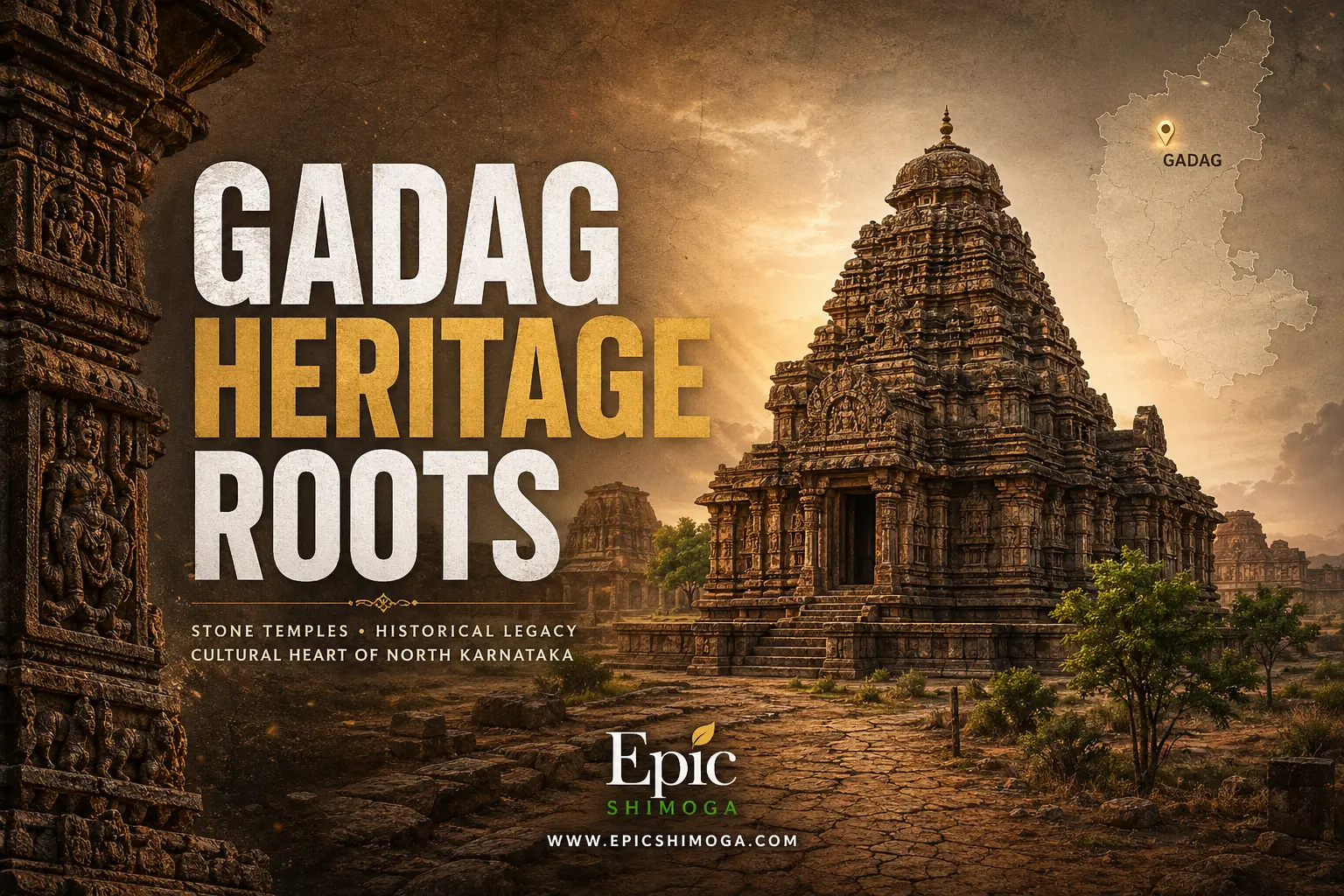
Gadag Karnataka is a historically rich district known for its temple architecture, early Kannada inscriptions, and cultural identity. In this guide, you will understand Gadag district history, location, taluk structure, meaning, and present development. This article gives clear and simple information for easy understanding.
In this article, you will explore complete details about district Gadag Karnataka history, geography, culture, agriculture, and importance. Everything is explained in simple English for easy understanding.
Introduction of Gadag Karnataka
Gadag district is located in northern Karnataka and is known for its deep historical roots and temple heritage. It is not part of the Malnad region but plays an important role in the cultural landscape of rural Karnataka.
The district reflects a mix of ancient history and present-day rural life. It is especially known for Chalukyan architecture and early Kannada inscriptions.
This article explains Gadag Karnataka history and culture in detail, covering its origin, geography, economy, and modern development.
What is Gadag? Overview of Gadag Karnataka
Gadag district functions as an administrative and cultural region in Karnataka known for its historical temples and architectural style developed during the Chalukya period. It serves as an important center for regional governance and agriculture.
Unlike coastal or Western Ghats regions, this region represents dryland Karnataka, where history and rural economy shape the identity. This makes it useful for understanding Gadag district details Karnataka in a simple and structured way.
- Known for Kalyani Chalukya architecture style
- Important district in North Karnataka
- Gadag city is the district headquarters
- Agriculture-based economy with historical importance
Gadag District Taluk List
Gadag district has 5 taluks that manage local administration and development. These taluks form the core structure of the district.
- Gadag
- Mundargi
- Ron
- Shirahatti
- Nargund
Total taluks in Gadag district: 5
Gadag Pin Code
Gadag Karnataka has multiple pin codes depending on area divisions, with the main urban region having a central code.
- 582101 – Main Gadag city
- 582102 – Surrounding urban areas
- 582103 – Nearby rural zones
Where is Gadag Located in Karnataka?
Gadag district lies in the northern part of Karnataka, between central and north Karnataka zones. It is positioned away from the Western Ghats, resulting in a dry climate pattern.
The district shares borders with Dharwad, Koppal, and Haveri, making it regionally connected.
- Located in North Karnataka
- Near Hubballi (major nearby city)
- Not part of Western Ghats or Malnad region
- Connected by rail and national highways
What is the Meaning and Origin of Gadag?
The name Gadag comes from the old Kannada word “Gadaga,” which refers to a settlement or established place. Historical inscriptions from the Chalukya period also mention similar names.
This shows that Gadag has had a continuous identity for many centuries.
- Derived from old Kannada “Gadaga”
- Found in early stone inscriptions
- Indicates ancient settlement region
- No major name change over time
History of Gadag Karnataka : Timeline
Gadag district history begins with early South Indian dynasties. The region gained importance during the Chalukya rule, especially between the 10th and 12th centuries.
The Kalyani Chalukyas developed this region as a major architectural center. Later, the Hoysalas and Vijayanagara Empire influenced governance and trade. During the British period, it became part of the Bombay Presidency, and after independence, it was reorganized into Karnataka. Gadag district was officially formed in 1997.
- 6th–8th century: Early Chalukya influence
- 10th–12th century: Kalyani Chalukyas peak development
- 13th–16th century: Hoysalas and Vijayanagara rule
- British period: Administrative control under Bombay Presidency
- 1997: Formation of Gadag district
Did Gadag Have an Old Name?
Gadag did not undergo a major name change but appeared in inscriptions as “Gadaga” and “Gadaga Nadu,” showing regional identity.
These names reflect administrative and cultural continuity rather than transformation.
- Historical names: Gadaga, Gadaga Nadu
- Found in temple inscriptions
- No complete renaming in history
Why Gadag is Famous?
Gadag Karnataka is famous for its temple architecture, historical sites, and Kannada cultural contributions. It is not a modern tourist hub but holds strong heritage value.
Nearby areas like Lakkundi and Dambal add to its historical importance. These places also make Gadag tourism places Karnataka important for history-based travel.
- Trikuteshwara Temple (Gadag city)
- Veera Narayana Temple
- Lakkundi stepwells and temples
- Dambal Buddhist site
Historical Background of Gadag Karnataka
The cultural strength of Gadag district comes from its temple structures and architectural design. The Kalyani Chalukya style is known for detailed carvings, pillars, and balanced structure.
Even today, many temples remain active and show the engineering knowledge of that period, forming a key part of Gadag Karnataka history and culture.
- Chalukyan stone architecture
- Structured temple layouts
- Religious continuity from past to present
- Influence on Kannada cultural identity
Natural Environment and Climate of Gadag
The climate in Gadag district is semi-arid with moderate rainfall. It differs clearly from the Western Ghats and Malnad region, which receive heavy rain.
The land is mostly dry, making agriculture dependent on seasonal rainfall and dryland farming methods.
- Semi-arid region
- Rainfall mainly during monsoon
- Dry plains and rocky land
- Suitable for dryland farming
Transport and Connectivity of Gadag
Gadag district is well connected by rail and road networks, acting as a link between central and northern Karnataka regions.
Railways play an important role in transport, especially for trade and daily travel.
- Gadag Junction railway station
- Connected to Hubballi and Bengaluru
- National highways pass nearby
- No airport, nearest is Hubballi
Education and Development in Gadag
Education in Gadag district has improved steadily over the years, especially after district formation in 1997. The literacy rate has increased gradually, with more access to primary schools in rural areas and degree colleges in towns.
Institutions like government first-grade colleges and teacher training centers support higher education. Government schemes focusing on rural education and digital learning have also improved access in villages.
- Literacy rate improving gradually in Gadag district
- Government and private degree colleges available
- Rural schools expanded under state education programs
- Skill development and basic digital education increasing
Economy and Agriculture of Gadag
Agriculture forms the backbone of Gadag district economy. Farmers depend on rainfall and grow crops suited for dry regions.
The district also has small-scale trade and local markets supporting rural livelihoods.
- Main crops: cotton, jowar, groundnut
- Dryland agriculture practices
- Weekly markets support economy
- Limited industries
Culture and Local Life in Gadag
Local life in Gadag reflects traditional rural Karnataka culture. Festivals, temples, and community gatherings are part of daily life.
The lifestyle is simple and closely connected to agriculture and seasonal cycles.
- Kannada language widely spoken
- Festivals: Ugadi, Deepavali
- Temple-centered traditions
- Strong village community system
Population of Gadag
Gadag district has a population mainly living in rural areas, with smaller towns acting as local centers. According to Census 2011, Gadag district has a population of around 1 million.
The population pattern reflects dependence on agriculture and stable growth over time.
- Majority rural population
- Kannada-speaking communities
- Moderate population growth
- Small urban centers
Why is Gadag Important?
Gadag district holds importance for its contribution to Karnataka history, architecture, and agriculture. It preserves early temple styles and cultural roots.
It also plays a role in regional connectivity and administration in North Karnataka.
- Historical and architectural importance
- Agricultural contribution
- Cultural identity of North Karnataka
- Administrative district role
Modern Day Gadag Karnataka
Modern Gadag Karnataka shows gradual development with improvements in infrastructure, transport, and public services. Road connectivity between Gadag and nearby cities like Hubballi has improved, helping trade and travel.
Railway connectivity through Gadag Junction continues to be an important transport link. At the same time, the district maintains its historical identity, especially in temple areas and heritage sites.
- Road improvements connecting Gadag to Hubballi and Koppal
- Gadag Junction remains a key railway hub
- Growth in basic infrastructure and services
- Balance between development and heritage preservation
FAQs About Gadag Karnataka
Gadag Karnataka which district?
Gadag itself is a district in Karnataka, created in 1997 from Dharwad district for better administration.
What is Gadag district famous for?
Gadag district is known for its temples, Chalukyan architecture, and historical places like Lakkundi and Trikuteshwara Temple.
What is the Gadag meaning?
The word Gadag comes from “Gadaga,” meaning an ancient settlement in Kannada.
How many taluks are in Gadag district?
There are 5 taluks in Gadag district: Gadag, Ron, Mundargi, Shirahatti, and Nargund.
Which language is spoken in Gadag Karnataka?
Kannada is the main language, along with local dialects used in rural areas.
What food is Gadag famous for?
Gadag is known for North Karnataka food like jolada rotti, ennegayi, and spicy chutneys.
Is Gadag in Malnad region?
No, Gadag is not part of the Malnad region and does not fall under the Western Ghats belt.
What is the climate of Gadag district?
Gadag district has a semi-arid climate with moderate rainfall and warm temperatures.
Conclusion of Gadag Karnataka
Gadag Karnataka stands as a strong historical and cultural district with deep roots in temple architecture and Kannada heritage. Its identity is shaped by history, agriculture, and rural Karnataka life.
Even with gradual modernization, Gadag district continues to preserve its past while adapting to present needs, making it an important region in Karnataka.
