


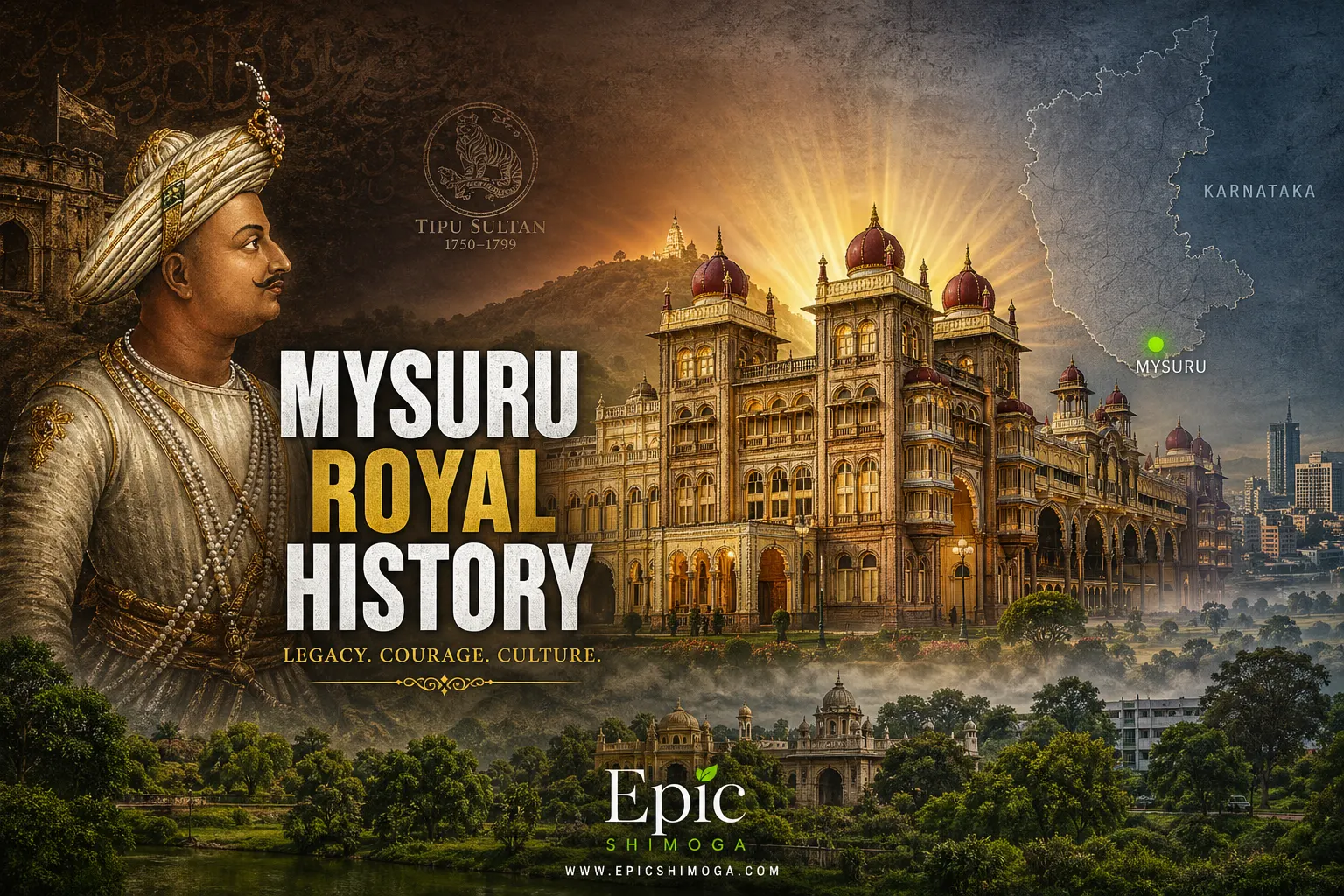
Mysuru is a historic city in Karnataka known for its royal heritage, planned layout, and cultural importance. In this guide, you will understand its location, history, name meaning, importance, and present condition. This article gives clear and simple information for easy understanding.
In this article, you will explore complete details about Mysuru Karnataka History, geography, economy, and cultural identity. Everything is explained in simple English with clear structure.
Introduction of Mysuru Karnataka
Mysuru is a major district and city in southern Karnataka. It lies in the old Mysore region and has deep historical roots connected to the Mysore Kingdom.
The city is known for its administrative past and structured urban design. Today, it is an important center for tourism, education, and governance in Karnataka.
This article explains Mysuru Karnataka history, geography, economy, and present-day development with clear and structured information.
What is Mysuru? Overview of Mysuru Karnataka
Mysuru is a historically important district in Karnataka that served as the capital of the Mysore Kingdom. Its identity is built on political history and administrative development rather than only tourism or culture.
Today, Mysuru continues to function as a key administrative and educational center in southern Karnataka.
- Former capital of the Mysore Kingdom
- Major tourism hub in Karnataka
- Known for palace architecture and planned city layout
- Important center for silk and sandalwood industries
- District headquarters with administrative importance
Mysuru taluk list
Mysuru district has a total of 7 taluks.
- Mysuru
- Nanjangud
- Tirumakudal Narasipura (T Narasipura)
- Hunsur
- Periyapatna
- Krishnarajanagar (K R Nagar)
- Heggadadevanakote (H D Kote)
Mysuru pin code
Mysuru uses multiple postal codes based on zones. The main city code is 570001.
- Central Mysuru: 570001
- Industrial areas: 570016
- Residential zones: 570017, 570018
- Rural taluks use different local pin codes
Where is Mysuru Located in Karnataka?
Mysuru is located in the southern part of Karnataka on the Deccan Plateau. It lies close to the borders of Kerala and Tamil Nadu and is influenced by nearby forest and hill regions.
The district is part of the Cauvery river basin and is connected to major cities through strong transport networks.
- Around 150 km southwest of Bengaluru
- Near Bandipur Tiger Reserve and Nilgiri hills
- Located in the Cauvery river basin
- Close to Western Ghats influence zone
- Well connected by road, rail, and regional airport
What is the Meaning and Origin of Mysuru?
The name Mysuru comes from “Mahishuru,” meaning the place of Mahisha, a demon king in local mythology. According to tradition, Goddess Chamundeshwari defeated Mahishasura on Chamundi Hills.
Over time, the name changed from Mahishuru to Mysore during British rule and later officially restored to Mysuru.
- Derived from Mahishasura legend
- Linked to Chamundi Hills
- British-era name Mysore
- Official name Mysuru restored in 2014
History of Mysuru Karnataka : Timeline
Mysuru has a clear historical timeline with major political and administrative changes over centuries.
Mysore Kingdom was considered one of the most progressive princely states, known for efficient administration and early modernization.
- Pre-14th century: Region ruled by local chiefs
- 1399: Became part of Vijayanagara Empire
- 1610: Wadiyar dynasty established control under Raja Wadiyar I
- 1761–1782: Hyder Ali ruled Mysore Kingdom
- 1782–1799: Tipu Sultan expanded and strengthened the kingdom
- 1799: British defeated Tipu Sultan in the Battle of Srirangapatna
- 1881: Wadiyar rule restored under British supervision
- Early 1900s: Mysore became one of the most developed princely states
- 1947: Integrated into independent India
- 1956: Became part of Karnataka state

Did Mysuru Have an Old Name?
Mysuru was originally called Mahishuru based on mythological roots. During British rule, it was renamed Mysore for easier pronunciation.
The name Mysuru was officially reinstated to preserve regional identity and language.
- Original name: Mahishuru
- Colonial name: Mysore
- Official modern name: Mysuru
- Reflects Kannada linguistic heritage
Why Mysuru is Famous?
Mysuru is famous mainly for its historical landmarks and large cultural events that reflect its royal past. These elements attract tourism and shape the city’s national recognition.
- Mysore Palace, one of India’s most visited monuments
- Dasara festival with royal procession
- Chamundi Hills and Chamundeshwari Temple
- Brindavan Gardens near KRS Dam
- Known for Mysore silk and sandalwood products
Historical Background of Mysuru Karnataka
The cultural identity of Mysuru developed under the Wadiyar dynasty, who supported art, music, and architecture. Their rule shaped the long-term cultural structure of the region.
Many historical buildings, temples, and institutions built during this period still exist today.
- Mysore Palace reflects Indo-Saracenic architecture
- Chamundeshwari Temple represents religious heritage
- Development of classical music and dance traditions
- Establishment of educational and cultural institutions
- Strong influence of royal traditions in festivals
Natural Environment and Climate of Mysuru
Mysuru has a moderate climate due to its elevation and location away from the coast. It does not receive heavy rainfall like the Malnad region but benefits from nearby forest ecosystems.
The district includes plains, river systems, and forest areas.
- Moderate rainfall influenced by Western Ghats
- Warm summers and mild winters
- Cauvery River supports agriculture
- Nearby forests like Bandipur support biodiversity
- Mix of rural Karnataka landscape and urban zones
Transport and Connectivity of Mysuru
Mysuru has strong transport infrastructure connecting it to major cities and regions.
It serves as a gateway to southern Karnataka and nearby hill regions.
- Bengaluru–Mysuru Expressway improves road travel
- Railway connects to major South Indian cities
- Mysuru Airport offers regional flights
- KSRTC bus network provides wide connectivity
- Easy access to tourist and forest areas
Education and Development in Mysuru
Mysuru is a major educational center in Karnataka. It has a long academic tradition and continues to develop in modern sectors.
The city has balanced growth in education and infrastructure.
- University of Mysore established in 1916
- Presence of engineering and medical colleges
- Growth in IT and research institutions
- Development under Smart City Mission
- Increasing urban infrastructure projects
Economy and Agriculture of Mysuru
Mysuru has a mixed economy where traditional industries and modern sectors both play an important role. The district connects agriculture, heritage industries, and tourism into a single economic system.
Mysuru silk is one of the most recognized silk products in India and contributes to Karnataka’s textile identity. Tourism also brings large seasonal income, especially during Dasara when lakhs of visitors arrive.
- Mysuru silk industry supports Karnataka’s textile exports
- Sandalwood oil production is historically linked to the region
- Tourism generates high revenue during Dasara season
- Agriculture includes sugarcane, paddy, and ragi in rural taluks
- Local economy connects handicrafts, tourism, and agriculture
Culture and Local Life in Mysuru
Mysuru has a structured cultural system shaped by royal traditions. The influence of the Wadiyar dynasty is still visible in festivals, music, and daily practices.
The Mysuru Dasara festival is one of the most organized cultural events in India. The Jumbo Savari procession, held on Vijayadashami, reflects royal traditions and attracts national attention.
- Dasara festival includes royal procession (Jumbo Savari)
- Strong base of Carnatic music and classical dance traditions
- Traditional arts supported during royal rule still continue
- Local food includes Mysore Pak and South Indian meals
- Kannada language shapes everyday life and communication
Population of Mysuru
Mysuru district has a balanced population with both urban and rural distribution. The city area is more densely populated than surrounding taluks.
Population growth is steady due to education and job opportunities.
- Mix of urban and rural population
- Kannada-speaking majority
- Increasing migration for education and jobs
- Good literacy rate compared to rural Karnataka
- Expanding city population zones
Why is Mysuru Important?
Mysuru is important due to its long-term administrative, cultural, and regional influence in Karnataka. It was one of the best-administered princely states in India and became a model for governance and development.
The region also saw early adoption of infrastructure systems like electricity and railways during princely rule, which supported long-term growth.
- Former administrative center of Mysore Kingdom
- Known for strong governance model in princely India
- Early adoption of electricity and railway systems
- Influences regional development in southern Karnataka
- Important center for education and institutional growth
Modern Day Mysuru Karnataka
Mysuru today is a developing city that balances heritage and modernization. Urban planning and infrastructure are improving steadily.
The city continues to grow while maintaining its identity.
- Smart City projects improving roads and services
- Growth of IT parks and business sectors
- Tourism remains a major economic driver
- Clean and planned urban environment
- Preservation of heritage buildings and sites
FAQs About Mysuru Karnataka
1. Mysuru which district?
Mysuru is a district in Karnataka and also its headquarters city.
2. What is Mysuru history known for?
It is known for the Wadiyar dynasty, Tipu Sultan, and the Mysore Kingdom.
3. Which language speaks in Mysuru?
Kannada is mainly spoken, along with English and Hindi in urban areas.
4. What food is Mysuru famous for?
Mysuru is famous for Mysore Pak, dosa, and traditional South Indian meals.
5. What is Mysuru meaning?
It means “land of Mahisha,” based on local mythology.
6. Is Mysuru in Malnad region?
No, it is not in Malnad but is influenced by nearby Western Ghats.
7. How many Mysuru taluks are there?
There are 7 taluks in Mysuru district.
Conclusion of Mysuru Karnataka
Mysuru Karnataka represents a strong connection between history and modern development. Its administrative legacy, cultural depth, and structured growth make it one of the most important cities in Karnataka.
The city continues to develop in education, tourism, and economy while preserving its historical and cultural identity.

1 Comment
Pingback: Districts in Karnataka: Complete List, Map, Regions, & Facts